Lemon ketchup is a refreshing twist on traditional ketchup, combining the familiar sweetness of tomatoes with the bright, tangy flavor of fresh lemon. Unlike regular ketchup, which usually has a sweeter and richer taste, lemon ketchup has a lighter citrus flavor that can make everyday meals taste fresher and more vibrant.
Lemon ketchup is made by combining tomatoes with lemon juice and a blend of simple seasonings such as vimade negar, spices, sugar, garlic, or onion. The ingredients are cooked together until the flavors develop and the mixture reaches a smooth, ketchup-like consistency. Homemade versions can also be adjusted to create a sweeter, tangier, or spicier flavor according to personal preference.
In this article, you’ll discover 9 delicious ways to use lemon ketchup in everyday meals, from French fries and burgers to grilled chicken, seafood, sandwiches, roasted vegetables, and homemade dressings. You’ll also get a complete step-by-step recipe for making homemade lemon ketchup, along with proper storage tips and common mistakes to avoid for the best flavor and consistency.
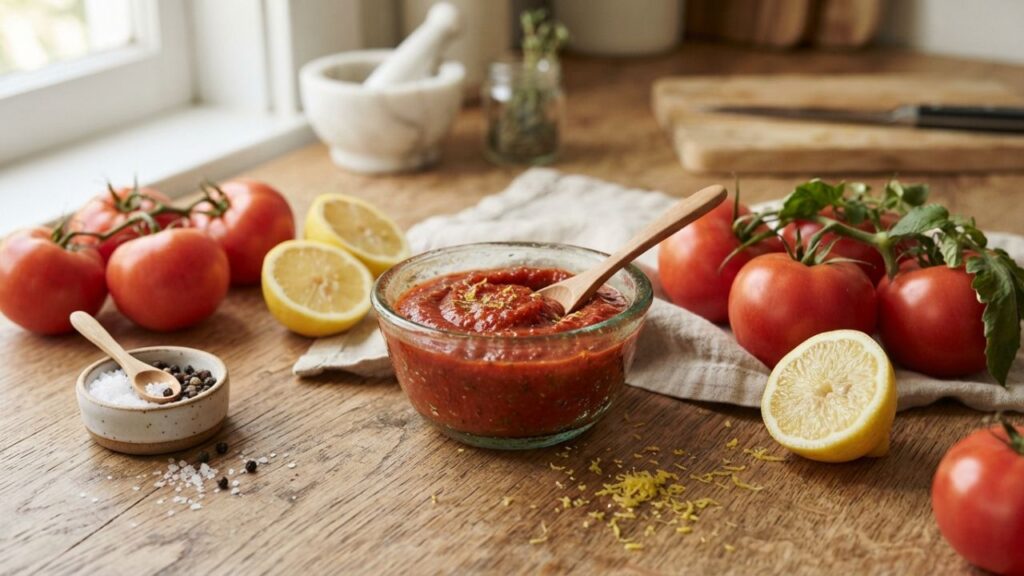
What Is Lemon Ketchup?
Lemon ketchup is a tomato-based condiment enhanced with fresh lemon juice or lemon zest to create a brighter, more citrus-forward flavor than traditional ketchup. While it shares many of the same core ingredients as classic ketchup, the addition of lemon gives it a refreshing acidity that works well with both savory and lightly sweet dishes.
The exact recipe can vary from one kitchen to another. Some homemade versions emphasize fresh citrus for a stronger tangy taste, while others keep the lemon flavor subtle so the natural tomato taste remains the star. Unlike many specialty sauces, lemon ketchup does not overpower food. Instead, it adds brightness that helps balance richer ingredients such as grilled meats, fried foods, and roasted vegetables.

How Lemon Ketchup Differs from Traditional Ketchup
| Feature | Traditional Ketchup | Lemon Ketchup |
| Flavor | Sweet, rich, and slightly smoky | Fresh, tangy, and citrusy |
| Acidity | Mild | Higher due to lemon juice |
| Taste | Classic and familiar | Lighter and fresher |
| Best With | Burgers, fries, sandwiches | Seafood, grilled chicken, salads |
| Texture | Thick and smooth | Similar, but may be slightly thinner |
| Main Benefit | Adds sweetness and rich flavor | Balances rich or oily foods with citrus acidity |
| Finish | Sweet and savory | Clean, fresh, and tangy |

How to Make Lemon Ketchup at Home
Making lemon ketchup at home is simple and requires basic ingredients that are easy to find. The key is to balance the natural sweetness of tomatoes with the bright acidity of lemon juice. Follow these steps for a smooth, flavorful homemade sauce.
Ingredients
- 2 cups tomato puree
- ¼ cup fresh lemon juice
- 1 teaspoon lemon zest
- 2 tablespoons vinegar
- 2 tablespoons sugar
- ½ teaspoon salt
- ½ teaspoon garlic powder
- ½ teaspoon onion powder
- ¼ teaspoon black pepper
- ¼ teaspoon mild paprika
Step-by-Step Method
1. Prepare the Tomato Base
Add the tomato puree to a medium saucepan and place it over medium heat. Stir gently and allow it to warm for a few minutes.
2. Add the Seasonings
Add sugar, salt, garlic powder, onion powder, black pepper, and paprika. Stir well so the seasonings are evenly mixed into the tomato base.
3. Add Vinegar and Lemon
Pour in the vinegar and fresh lemon juice. Add the lemon zest and stir thoroughly. These ingredients give the ketchup its distinctive fresh and tangy flavor.
4. Simmer the Mixture
Reduce the heat to low and let the mixture simmer for about 20–30 minutes. Stir occasionally to prevent it from sticking to the bottom of the pan.
5. Check the Consistency
Continue cooking until the ketchup becomes smooth and slightly thick. If it seems too thick, add a small amount of water. If it is too thin, simmer it for a few more minutes.
6. Blend for a Smooth Texture
For an extra-smooth ketchup, carefully transfer the mixture to a blender and blend until completely smooth. You can also use an immersion blender directly in the saucepan.
7. Taste and Adjust
Taste the ketchup and adjust the flavor if needed. Add a little more lemon juice for extra tanginess or a small amount of sugar if you prefer a sweeter taste.
8. Cool and Store
Allow the lemon ketchup to cool completely before transferring it to a clean, airtight container. Store it in the refrigerator and use it with your favorite meals.
Serving Ideas
Homemade lemon ketchup works well as a dipping sauce for French fries, roasted potatoes, grilled chicken, seafood, burgers, sandwiches, wraps, and roasted vegetables. It can also be mixed with mayonnaise or yogurt to create a quick creamy dipping sauce.

15 Delicious Ways to Use Lemon Ketchup in Everyday Meals
Lemon ketchup is far more versatile than many people expect. Its bright citrus flavor can elevate everything from quick snacks to hearty family dinners. Whether you use it as a dip, glaze, spread, or cooking ingredient, it brings a refreshing balance that complements both rich and light dishes.
1. Dip Crispy French Fries
Few foods are as closely associated with ketchup as crispy French fries, and lemon ketchup offers a fresh take on this classic pairing. The citrus notes cut through the richness of fried potatoes, making each bite feel lighter without sacrificing flavor.
For homemade fries, sprinkle them with flaky sea salt, cracked black pepper, and a little chopped parsley before serving alongside lemon ketchup. If you’re using frozen fries, the same garnish can instantly make them feel more homemade.
2. Spread It on Burgers and Sandwiches
Lemon ketchup adds a bright layer of flavor to burgers, chicken sandwiches, and deli-style lunch creations. Instead of simply adding sweetness, it introduces a pleasant acidity that balances juicy meat, melted cheese, and fresh vegetables.
It works particularly well with grilled chicken burgers, turkey burgers, and vegetable patties. Pair it with crisp lettuce, ripe tomatoes, onions, and avocado for a sandwich that tastes fresh without requiring complicated toppings.
3. Serve with Grilled Chicken
Grilled chicken often benefits from a sauce that adds moisture and brightness without overwhelming the meat. Lemon ketchup does exactly that. Brush it lightly over chicken during the final few minutes of grilling so the natural sugars caramelize without burning. You can also serve it on the side as a dipping sauce alongside grilled vegetables or roasted potatoes.
In my kitchen, I sometimes stir a little olive oil and freshly cracked pepper into lemon ketchup before brushing it over chicken thighs. The result is a light glaze with just enough citrus to complement the smoky flavor.
4. Glaze Baked or Fried Fish
Fish and lemon have long been a natural pairing, so it’s no surprise that lemon ketchup works beautifully with seafood. It adds sweetness, acidity, and tomato richness without masking the delicate flavor of the fish.
Brush a thin layer over baked cod or grilled salmon during the last few minutes of cooking, or serve it as a dipping sauce with crispy fish fillets. A sprinkle of fresh dill or parsley finishes the dish nicely.
5. Mix into Salad Dressings
Lemon ketchup can serve as the base for a quick homemade dressing.
Whisk together:
- 2 tablespoons lemon ketchup
- 2 tablespoons olive oil
- 1 tablespoon apple cider vinegar
- 1 teaspoon Dijon mustard
- Freshly ground black pepper
6. Use as a Dip for Chicken Nuggets
Chicken nuggets become more interesting with a dipping sauce that offers more than simple sweetness. Lemon ketchup delivers a bright finish that complements crispy breading without overpowering the chicken. For extra flavor, mix equal parts lemon ketchup and Greek yogurt or mayonnaise to create a creamy dip. Add garlic powder or smoked paprika if you prefer a richer taste.
7. Drizzle Over Roasted Vegetables
Roasted vegetables naturally develop caramelized edges and deep flavors. Lemon ketchup adds a contrasting layer of acidity that keeps the dish from feeling too heavy.
Try it with:
- Roasted potatoes
- Carrots
- Cauliflower
- Brussels sprouts
- Sweet potatoes
8. Brush onto BBQ Meat
Barbecue sauces often lean heavily toward sweetness or smokiness. Lemon ketchup offers a lighter alternative that still caramelizes nicely on the grill.
Brush it over:
- Chicken drumsticks
- Pork chops
- Beef skewers
- Turkey cutlets
9. Pair with Seafood
Beyond fish, lemon ketchup works well with many types of seafood.
Serve it alongside:
- Grilled shrimp
- Crab cakes
- Fried calamari
- Fish fingers
- Seafood skewers
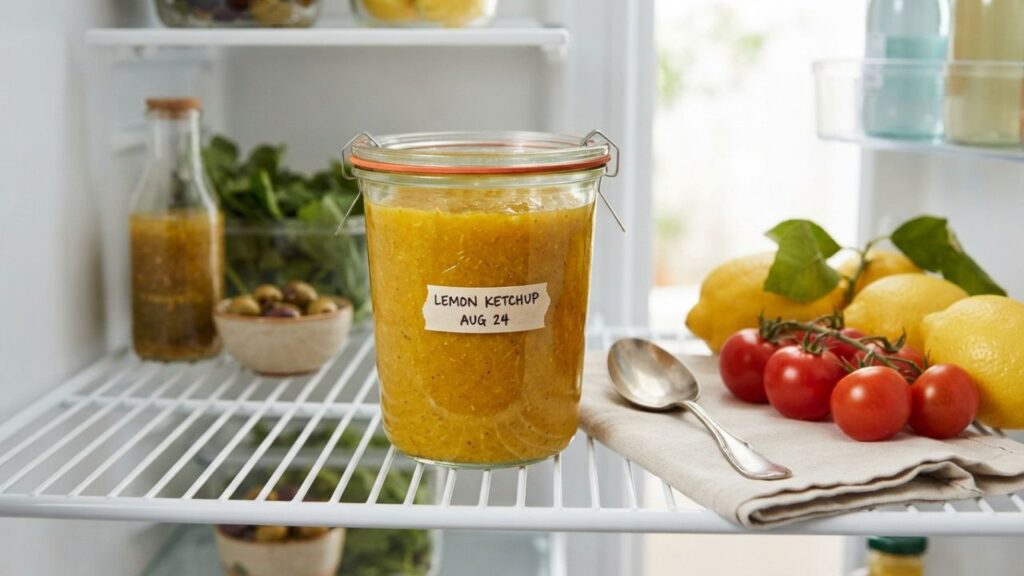
How to Store Lemon Ketchup Properly
Proper storage helps preserve both flavor and freshness. Keep lemon ketchup in a clean, airtight container and refrigerate it promptly after preparation. Always use a clean spoon when serving, and avoid leaving the sauce at room temperature for extended periods.
Refrigeration Tips
Once opened, lemon ketchup should always be stored in the refrigerator. Keep the bottle or jar tightly sealed after each use to prevent it from absorbing odors from other foods. Using a clean spoon or utensil each time also helps reduce contamination and extends its freshness.
For more information, we’ll take you to the U.S. government’s official website where you can read the article Refrigerator Thermometers – Cold Facts about Food Safety and learn more about food safety and proper refrigerator storage.
Shelf Life After Opening
Commercial lemon ketchup typically keeps well for several weeks after opening when refrigerated. Always check the manufacturer’s guidance for the recommended storage period. Homemade lemon ketchup generally stays fresh for 7 to 10 days when stored in an airtight container in the refrigerator.
Discard the sauce if you notice:
- Mold
- An unpleasant odor
- Bubbling or signs of fermentation
- Significant changes in color or texture

Common Lemon Ketchup Mistakes
Making homemade lemon ketchup is simple, but a few common mistakes can affect its flavor, texture, and overall quality. Keeping the balance between tomatoes, lemon juice, sweetness, and seasonings is important for getting a smooth and flavorful sauce.
1. Too Much Lemon Juice
Adding too much lemon juice can make the ketchup overly sour and may overpower the natural tomato flavor. Start with the recommended amount and adjust gradually after tasting.
2. Adding Too Much Sugar
Sugar should balance the acidity of the tomatoes and lemon, not make the ketchup overly sweet. Add the recommended amount first, then adjust slightly if needed.
3. Skipping Simmering
Cooking the mixture slowly helps the ingredients blend together and allows the ketchup to develop a richer flavor. Avoid rushing this step or using excessively high heat.
4. Checking Consistency
Lemon ketchup should have a smooth, slightly thick consistency. If it is too thin, continue simmering for a few more minutes. If it becomes too thick, add a small amount of water.
5. Overlooking the Seasonings
Salt, garlic powder, onion powder, black pepper, and paprika help create a balanced flavor. Measure the seasonings carefully so one ingredient does not overpower the lemon and tomato flavors.
6. Failing to Blend the Sauce
If you want a smooth ketchup, blending the cooked mixture is an important step. Proper blending removes a coarse texture and creates a more familiar ketchup-like consistency.
7. Storing It Improperly
Allow the ketchup to cool before transferring it to a clean, airtight container. Homemade lemon ketchup should be refrigerated promptly and served with a clean utensil to help maintain its freshness.
FAQs
1. What is lemon ketchup made of?
Lemon ketchup is typically made from tomato paste or tomato puree, lemon juice, lemon zest, vinegar, sugar, salt, and seasonings such as garlic and onion powder. Some recipes also include herbs or mild spices for added flavor.
2. Is lemon ketchup healthier than regular ketchup?
The nutritional value depends on the recipe. Homemade versions often allow you to control the amount of sugar and salt, while commercial products vary by brand. Lemon itself contributes fresh citrus flavor but doesn’t dramatically change the overall nutritional profile.
3. Can I make lemon ketchup at home?
Yes. Homemade lemon ketchup is relatively simple to prepare using tomato paste, fresh lemon juice, vinegar, sweetener, and your preferred seasonings. Adjust the balance of sweetness and acidity to suit your taste.
4. What foods taste best with lemon ketchup?
Lemon ketchup pairs well with French fries, roasted potatoes, grilled chicken, seafood, burgers, wraps, sandwiches, roasted vegetables, and snack platters. It can also be used in marinades, salad dressings, and dipping sauces.
5. Is lemon ketchup spicy or sweet?
Most lemon ketchup recipes are mildly sweet with a noticeable citrus tang. They are not usually spicy unless ingredients such as chili flakes, cayenne pepper, or hot sauce are added.

Conclusion
Lemon ketchup proves that a simple variation on a familiar condiment can bring new life to everyday cooking. Its combination of tomato richness and bright citrus flavor makes it suitable for everything from quick lunches to relaxed family dinners. Whether you’re serving crispy fries, grilling chicken, preparing seafood, or building sandwiches, this versatile sauce offers an easy way to add freshness without making your recipes more complicated. Small changes often have the biggest impact, and experimenting with different pairings can help you discover new favorites. As with many kitchen staples, the best results come from using quality ingredients and tasting as you go. A little lemon ketchup can brighten familiar meals, making them feel fresh while still keeping the cooking approachable and enjoyable.
About the Author
Emlia James is a home cook and food enthusiast who enjoys creating approachable recipes with fresh, everyday ingredients. With a passion for practical cooking techniques and balanced flavors, she focuses on helping readers prepare meals that are satisfying and easy to recreate. Her goal is to make home cooking enjoyable, accessible, and inspiring for every season.